
Ziplyft for Providers
A New Approach to the Upper Eyelid Lift.
Bring minimally invasive eyelid rejuvenation into your practice with Ziplyft, a patented, in-office device designed to simplify upper eyelid skin removal with no sutures, no cautery and minimal downtime.

<15 MIN
In-Office Procedure
ZERO
Sutures · No Cautery
7 TO 10 DAYS
Event-Ready
Why Ziplyft
Elevate What You Can Offer Your Patients.
Patients want meaningful upper eyelid rejuvenation without the complexity, recovery and operating-room requirements associated with traditional blepharoplasty.
Ziplyft was designed to give physicians another option.
Designed for the Office
Local anesthetic. No operating room or IV sedation.
Designed for Efficiency
A procedure completed in less than 15 minutes.
Designed for Recovery
No sutures or cautery, with patients typically event-ready in 7 to 10 days.
The Device
Precision by Design.
Ziplyft uses compression in place of cautery and sutures. The device clamps the marked skin, seals it as the excess is excised, and leaves a ridge that closes with topical adhesive.
Ziplyft Device Procedure Animation
Ziplyft:
- Reduces bruising and swelling
- Reduces bleeding
- Eliminates sutures
- Patients can get back to life quickly
Compression Skin Contouring (CoCo™)
Step 01
Compress
Compression creates hemostasis before removal.
Step 02
Remove
Excess upper eyelid skin is precisely removed.
Step 03
Seal
Skin edges are closed with medical-grade tissue adhesive rather than sutures.
Results
See What's Possible.
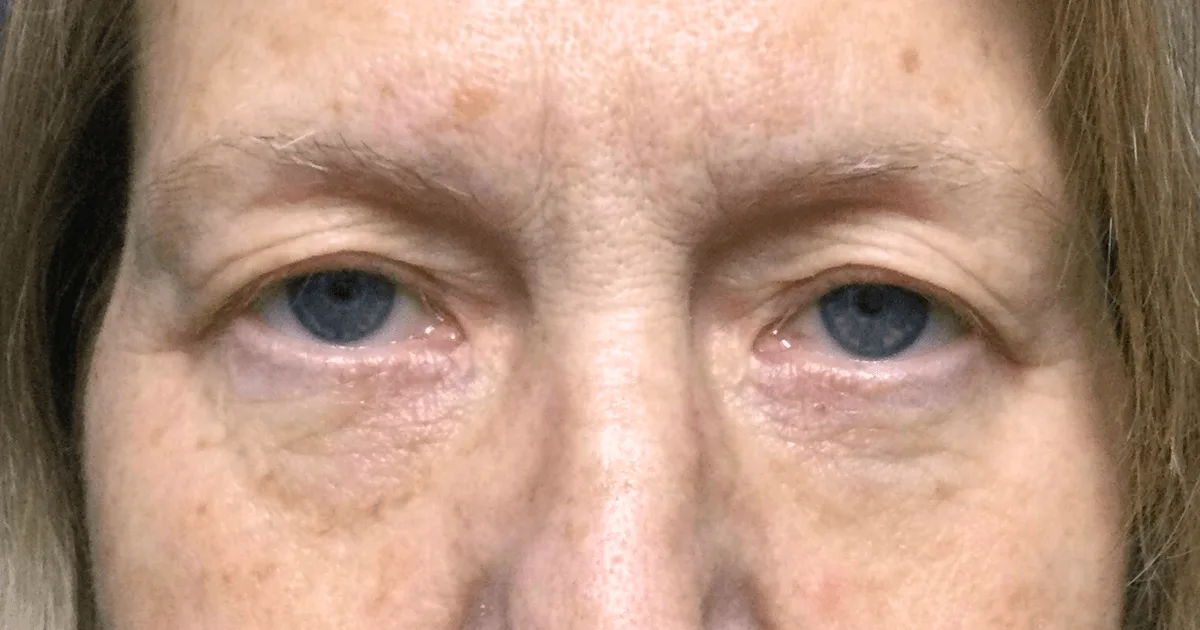
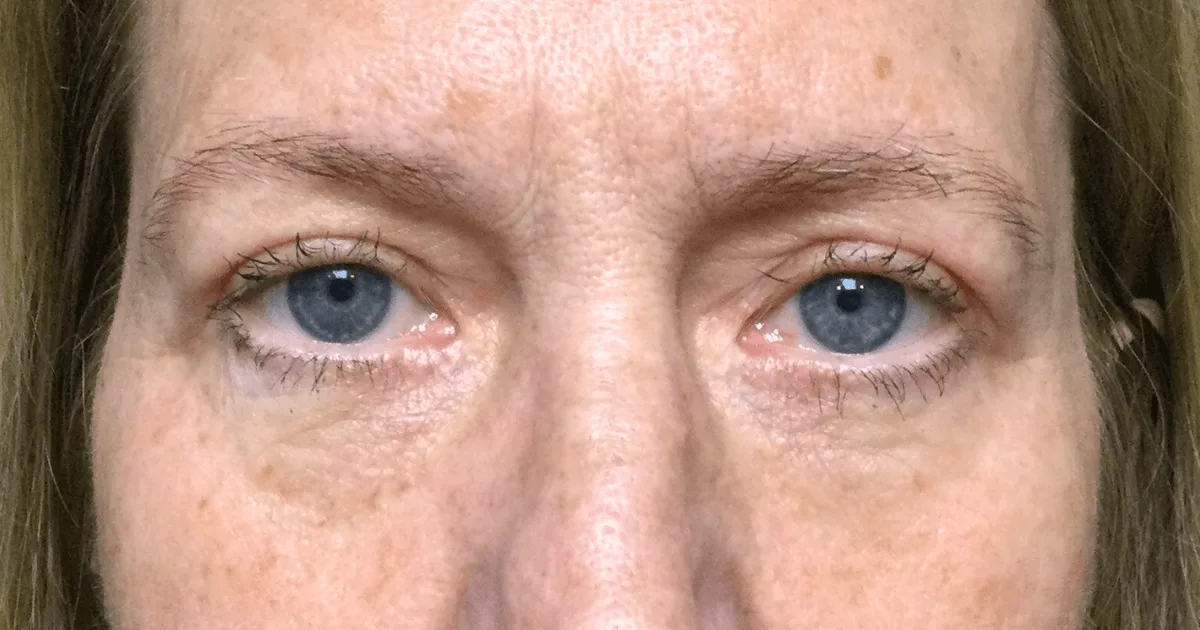
Select a Case
Device Features
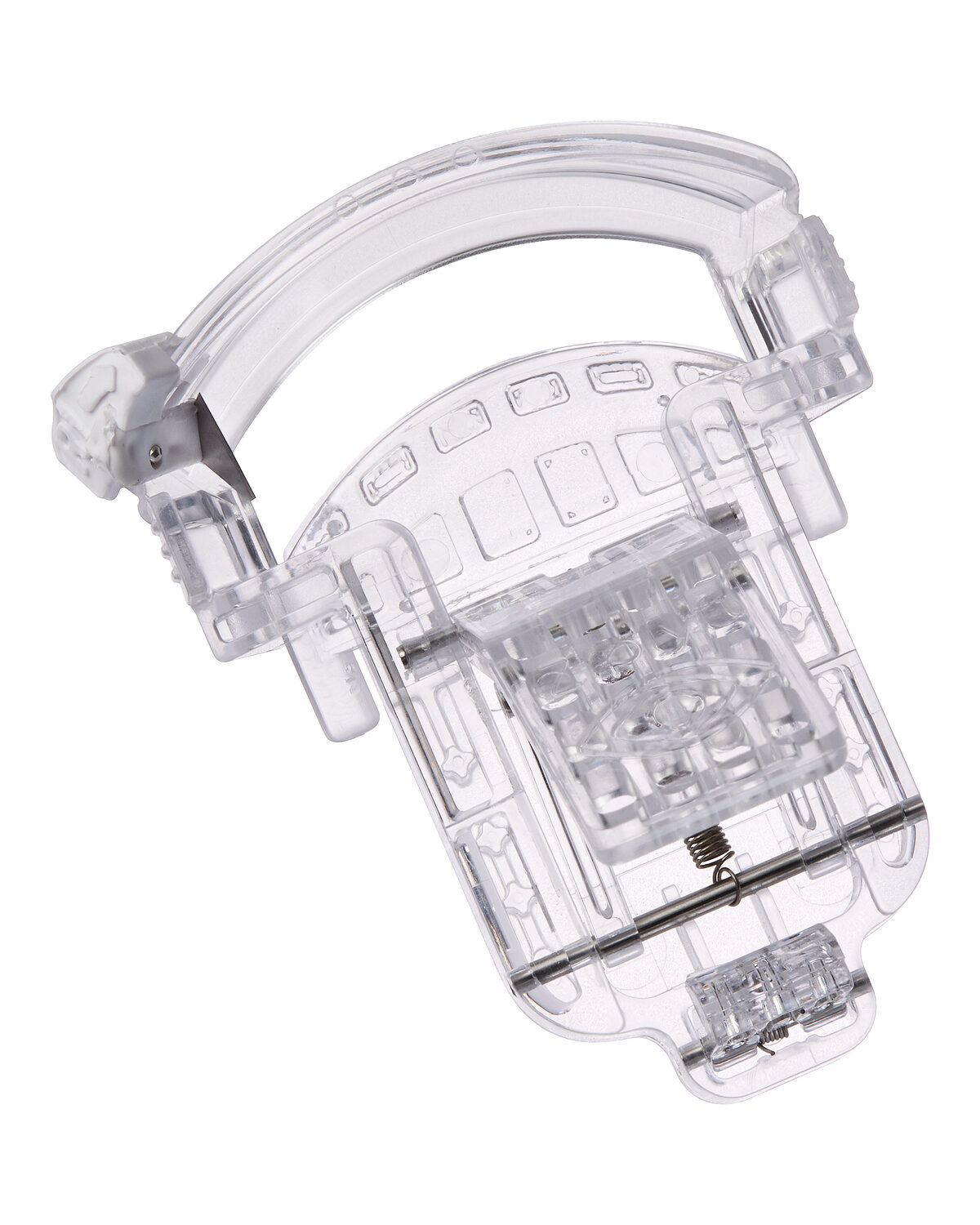
A Closer Look at the Ziplyft Design.
Every element of the device is designed to make upper eyelid rejuvenation efficient, symmetric, and predictable—with minimal bleeding and no need for cautery.
-
Smooth Jaws
The jaws seal the skin as they close, eliminating bleeding and the need for cautery.
-
Smooth Blade Operation
A guarded blade advances across the jaws in a single controlled pass.
-
Sharp, Thin Blade
A sharp, thin blade profile for a clean cut edge.
-
Firm Clamp Pressure
Consistent hemostasis across the full length of the incision.
-
Intuitive Latch Closure
A simple locking lever and release button, so the jaws open and close predictably.
-
Clear Body, Visible Markings
See your skin markings through the device, and use the device markings for symmetric placement.
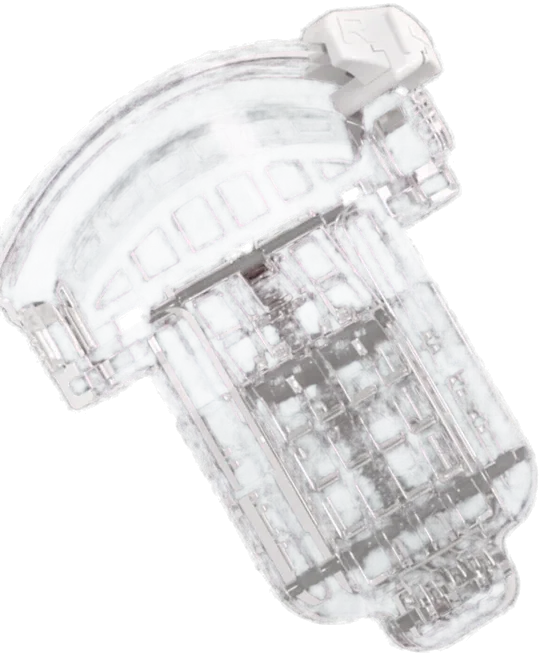
What's in the Kit
Each sterile Ziplyft™ kit contains two single-use devices and one fixation forceps. The white blade guide is the right eye, the black blade guide is the left.
- Right-Eye Device
- Left-Eye Device
- Ziplyft Fixation Forceps
Single use only. Dispose of each device in an approved sharps container after the procedure. Devices are not designed to be reused, re-sterilized or disassembled.
In Practice
Ziplyft™ in Practice
Join a growing community of physicians bringing minimally invasive eyelid rejuvenation to their patients.
Dr. Kent
 Dr. Kent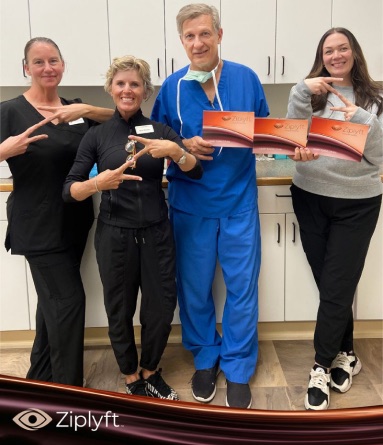
The Eye Associates
Dr. Berkowitz
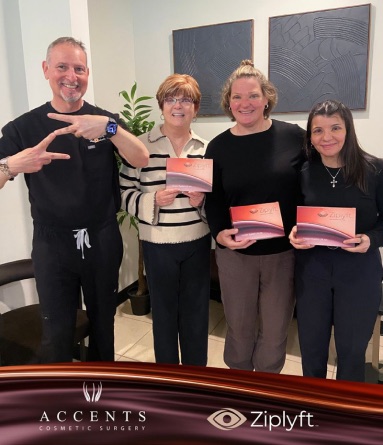
Accents Cosmetic Surgery
Dr. Martén
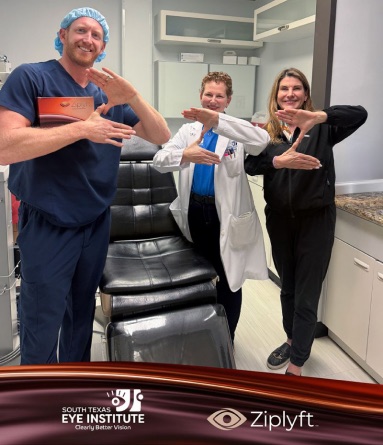
South Texas Eye Institute
Everything You Need to Get Started.
Technique & Preparation
The Ziplyft Technique Guide, the setup checklist for your circulator or surgical assistant, and treatment day reminders for the procedure room.
Patient Resources
A printable patient guide with post-op care, the Ziplyft informed consent form, and the guide to pre- and post-treatment photos.
Training & Surgical Videos
Procedure videos and training materials on products.ziplyft.com. Access requires a verified medical license.
Our Founder
Developed by Physicians.
Built for Physicians.
After decades of caring for patients and performing eyelid procedures, Dr. Patricia Buehler experienced traditional upper blepharoplasty firsthand. That perspective, surgeon and patient at once, is what led her to create Ziplyft™.
Osheru was founded in Bend, Oregon in 2021 by Dr. Patricia Buehler, MD, MPH and Dr. Knute Buehler, MD, with a single goal: democratize, simplify, and beautify eyelid surgery. Ziplyft™ is the first application of that work, and the first treatment in the Minimally Invasive Lid Treatment (MILT) category.
Dr. Patricia Buehler, MD, MPH

Founder & CEO, Osheru, Inc.
Questions From Providers
What is included in a Ziplyft™ kit?
Each sterile kit contains two single-use Ziplyft devices and one Ziplyft fixation forceps. The device with the white blade guide is for the right eye, and the device with the black blade guide is for the left. Devices are single use: dispose of each one in an approved sharps container after the procedure, and do not reuse, re-sterilize or disassemble them.
What does the in-office workflow look like?
Mark the excess upper eyelid skin as you normally would for a blepharoplasty, inject 2% lidocaine with epinephrine and allow roughly ten minutes for anesthetic and vasoconstrictive effect, then prep the lids with Betadine. Position the device, draw the marked skin into the jaws, confirm placement and compress. Each eye runs through a timed compression, excision and hemostasis sequence before the device is released. Dry the sealed ridge, apply Dermabond, and allow about two minutes to cure. No operating room and no IV sedation.
What does my team need to have on hand?
The Ziplyft setup checklist covers the full list: sterile gloves and device pack, Mayo stand cover, gauze and cotton applicators, 2% lidocaine with epinephrine with 3 cc syringes and 30-gauge needles, proparacaine drops, Dermabond Advanced 0.7 mL, a fine-tip skin marking pen with ruler, alcohol swabs and Betadine prep, saline rinse, and an ice or gel pack. Optional items include toothed forceps, a curved locking hemostat and Tegaderm.
What anesthesia and pre-medication are used?
Local only. 2% lidocaine with epinephrine along the upper eyelid, with proparacaine drops for comfort. Practices commonly have patients take extra-strength Tylenol and Aleve before treatment, with an optional oral anxiolytic 30 minutes prior. No IV anesthesia is required.
What should my patients expect afterward?
Bruising and swelling are normal and typically resolve within 7 to 10 days. The skin adhesive begins to peel off naturally about 5 to 7 days post-op and should not be picked at. Patients ice the area 20 minutes on and off for the first 2 to 3 days, keep it dry for the first 48 hours, skip topical antibiotics and ointments, and avoid makeup on the treated area for at least 5 days. The Ziplyft patient guide covers all of this in handout form.
How should pre- and post-op photos be taken?
Standard frontal views at every visit: the patient looks straight at the camera with eyes open, then closed, sitting up or standing. A smartphone in the exam lane is fine with good lighting or a ring light. Preview each post-op photo against the pre-op set so head position and framing match, and photograph at 1 week and 2 months to track healing.
How do patient referrals reach my practice?
Your practice designates a Ziplyft lead contact. Referrals arrive by introduction email; reply with the Ziplyft team copied so we know the handoff landed, then reach the patient directly by phone, email and text, aiming to respond within one business day. Keep the Ziplyft lead tracking form updated with contact attempts, consultation status and outcomes.
Take the Next Step
Open Your Eyes Beautifully™
Discover a minimally invasive approach to upper eyelid rejuvenation. Find a trained Ziplyft™ provider near you and find out whether it’s right for you.